sales@menred.com Deutsch Deutsch 中文 中文
NET.Plus Total Heat Recovery Ventilator

NET.Plus Total Heat Recovery Ventilator NET.Plus Total Heat Recovery Ventilator NET.Plus Total Heat Recovery Ventilator

NET.Plus Total Heat Recovery Ventilator
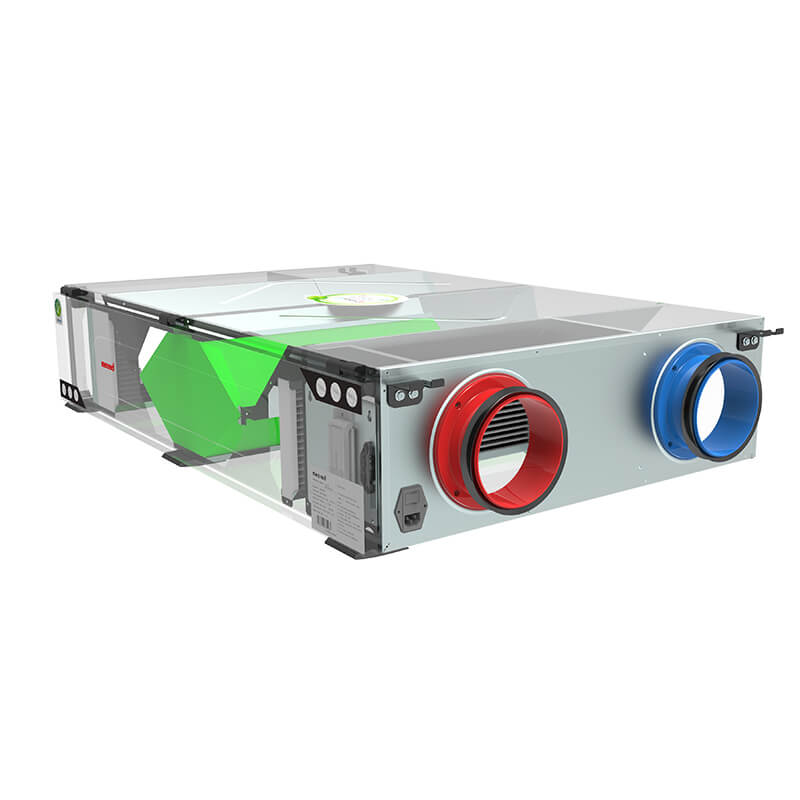
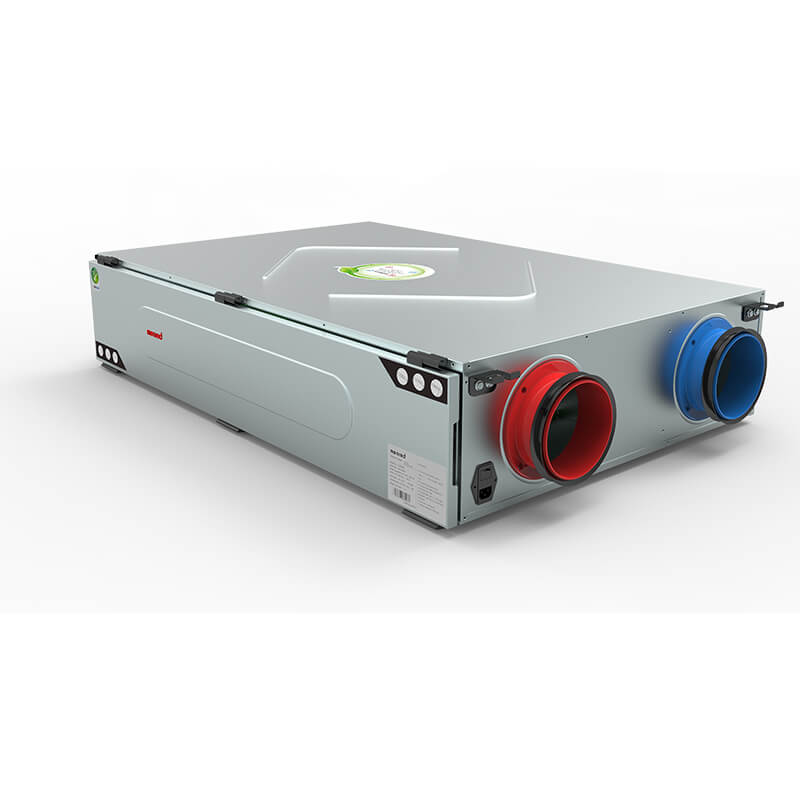
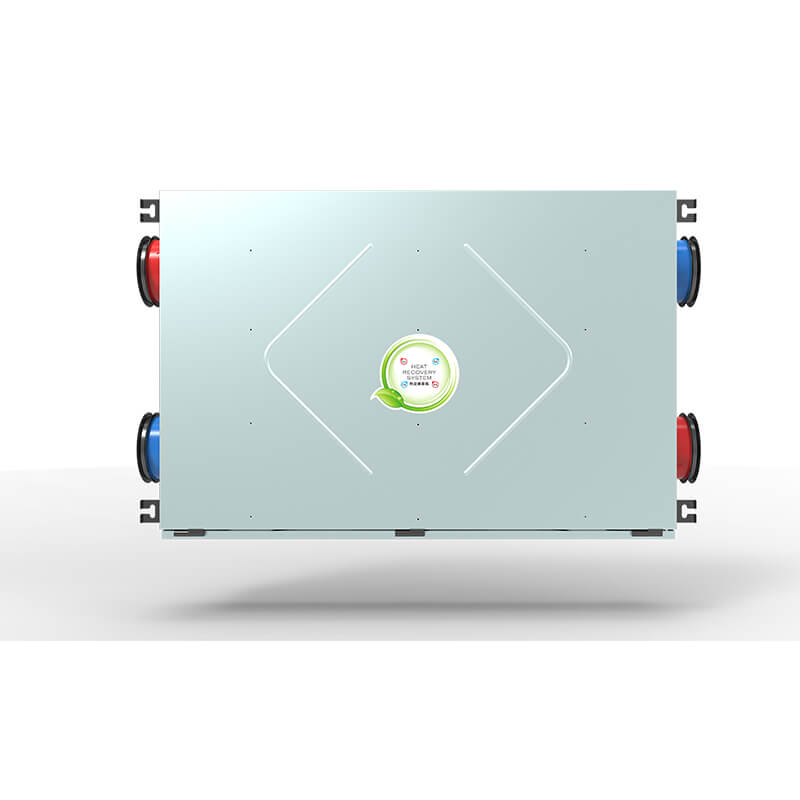
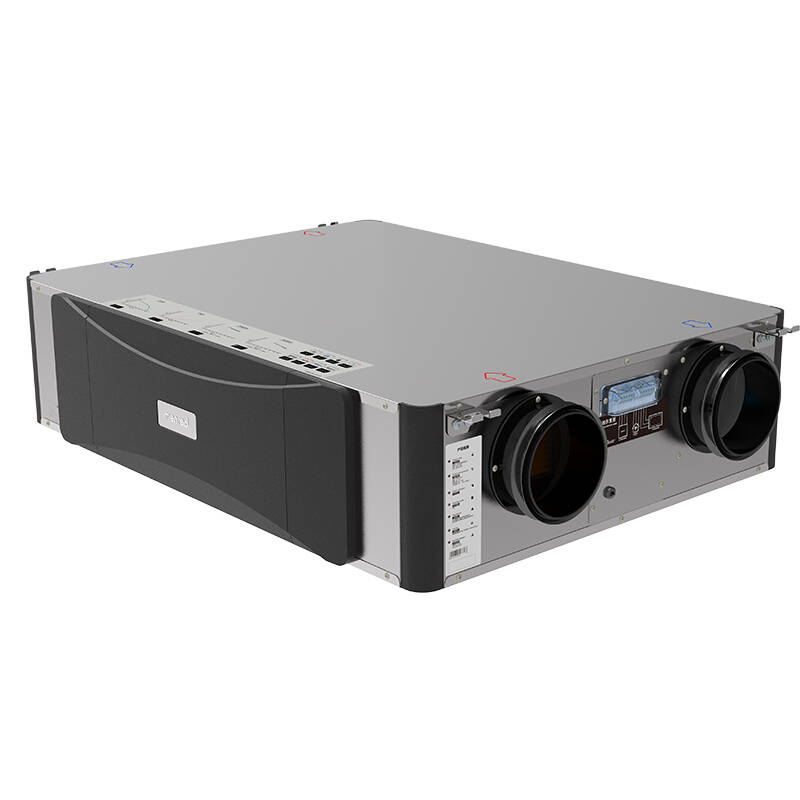
The MENRED High-Quality Central Ventilation System - Ceiling Mounted Type, NET.plus series with temperature recovery. Our unique fluid design features a built-in sound-deadening compartment and three layers of filtration for efficient filtration of PM2.5. This system also provides cost savings through its energy-efficient heat recovery ventilator unit. The central ventilation system is a ceiling-mounted type that helps produce cleaner air indoors, improving overall indoor air quality. With the three layers of filtration, it provides superior purification of harmful airborne particles, creating a healthier and more comfortable living space. The air heat recovery function recovers temperature from the extracted stale air before expelling it outside, reducing energy consumption and costs. This feature helps maintain a comfortable temperature, especially during cold weather, while contributing to cost savings. The MENRED High-Quality Central Ventilation System - Ceiling Mounted Type, NET.plus series is an excellent choice for those who prioritize indoor air quality, energy efficiency, and comfort.

The MENRED Total Heat Recovery Ventilation System offers a comfortable and energy-saving solution for a better quality of life. This system is designed to efficiently recover heat from extracted stale air and provide a constant supply of fresh, clean air.

By recovering the heat from the extracted stale air, our heat recovery ventilation system significantly reduces energy consumption and costs, providing an eco-friendly solution. This system ensures a continuous supply of fresh air while keeping the indoor environment comfortable and healthy.

The MENRED Heat Recovery Ventilation System is an excellent choice for those who value comfort, energy efficiency, and a healthier living space. It is a reliable and cost-effective solution that helps to improve indoor air quality while providing a comfortable living environment.


Features:

1. The three models are suitable for various houses, offices and villas.

2. The filter cartridge adopts multiple filters (screen + coarse filter + high efficiency filter) to greatly increase the dust capacity of the product, making the life of the filter cartridge significantly increased, and can efficiently filter PM2.5.

3. Ventilation system is suitable for floor type fresh air or ceiling type fresh air system.

4. The fan adopts low noise and high wind pressure forward tilting centrifugal motor.

5. The rhombic countercurrent type total heat exchange core meets the national standard.

6. The product has built-in sound-deadening duct, which can effectively reduce wind noise.


Outline Dimension(mm)


Outline Dimension(mm)
ABCDØEFG
NET150. Pro12405602451001165460290
NET250. Pro12456602451501165560330
NET350. Pro12457602451501165660405


Selection Table:

ModelNET.150 PlusNET.250 PlusNET.350 Plus
Voltage(V/Hz)220/50220/50220/50
Air volume(m³/h)150/120/90250/200/130350/230/140
Power(W)115/105/95160/140/120206/155/125
Noise(dB(A))30/25/2333/26/2336/33/25
Weight(KG)283236
Filter modelF137,F184,F152F133,F186,F153F128,F188,F154
Filter classAir inlet:H13(1);Return air inlet:H11(1)Air inlet:H13(1);Return air inlet:H11(1)Air inlet:H13(1);Return air inlet H11(1)

FAQs

How does an ERV fit into the MENRED Wuheng Climate System? How does an ERV fit into the MENRED Wuheng Climate System?
The MENRED Wuheng Climate System takes an integrated approach to indoor climate by coordinating temperature control, humidity management, fresh air, cleanliness, and quietness.
Read More
Can an ERV work with radiant heating and cooling? Can an ERV work with radiant heating and cooling?
Yes. An ERV can work alongside radiant heating and cooling as part of an integrated indoor climate system.
Read More
How often should an ERV be serviced? How often should an ERV be serviced?
Routine maintenance generally includes checking filters, inspecting the heat or enthalpy exchange core, checking fans and accessible air passages, and verifying that supply and exhaust airflow remain appropriate.
Read More
How often should ERV filters be replaced? How often should ERV filters be replaced?
Filter maintenance intervals depend on the filter type, outdoor air quality, operating hours, and the manufacturer's instructions.
Read More
Can an ERV be installed in an existing home? Can an ERV be installed in an existing home?
Yes. Depending on the building layout and the selected model, an ERV may be suitable for retrofit projects as well as new construction.
Read More
Is an ERV noisy? Is an ERV noisy?
ERVs contain fans and moving air, so some operating noise is unavoidable. The perceived noise depends on fan speed, unit design, installation quality, duct sizing, airflow velocity, vibration isolation, and the location of the unit.
Read More
Where should an ERV be installed? Where should an ERV be installed?
The installation location depends on the ERV model, building layout, duct routing, outdoor air intake and exhaust locations, and access requirements.
Read More
How do I choose the right ERV for my home? How do I choose the right ERV for my home?
Start with the required ventilation airflow, then evaluate the unit's delivered airflow at the planned external static pressure, recovery performance, filtration, sound levels, dimensions, power consumption, controls, and maintenance access.
Read More
Does an ERV provide clean air without opening windows? Does an ERV provide clean air without opening windows?
An ERV can provide a controlled supply of outdoor air while reducing the need to open windows solely for ventilation.
Read More
Can an ERV remove PM2.5, dust, and pollen? Can an ERV remove PM2.5, dust, and pollen?
An ERV can reduce incoming airborne particles when equipped with suitable filters. Its effectiveness depends on the filter's tested efficiency, the particle size, sealing, airflow, and filter maintenance.
Read More
Can an ERV reduce indoor CO₂ levels? Can an ERV reduce indoor CO₂ levels?
An ERV can help reduce indoor carbon dioxide (CO₂) concentrations by replacing CO₂-rich indoor air with outdoor air, provided that the outdoor airflow and air distribution are adequate for the occupancy.
Read More
How much fresh air does a home need? How much fresh air does a home need?
Required outdoor airflow depends on the applicable building code, occupancy, floor area, room use, and the ventilation design standard used for the project.
Read More
Is an ERV suitable for hot and humid climates? Is an ERV suitable for hot and humid climates?
An ERV can be part of a ventilation strategy for hot and humid climates, but the design must account for both heat and moisture loads.
Read More
Does an ERV work in both summer and winter? Does an ERV work in both summer and winter?
Yes. An appropriately designed ERV can operate in both heating and cooling seasons.
Read More
Can an ERV control indoor humidity? Can an ERV control indoor humidity?
An ERV with an enthalpy exchange core can transfer moisture between incoming and outgoing air streams. This may help moderate indoor humidity, but it does not actively remove moisture in the same way as a dedicated dehumidifier.
Read More
Does an ERV save energy? Does an ERV save energy?
An ERV can reduce the energy required to condition outdoor ventilation air by recovering part of the heat and, where applicable, moisture from the exhaust air.
Read More
What is the difference between an ERV and a standard exhaust fan? What is the difference between an ERV and a standard exhaust fan?
A standard exhaust fan removes indoor air but does not normally recover energy from it. Replacement outdoor air must enter through designed inlets or other openings, and its temperature and moisture can add to the building's heating or cooling load.
Read More
What is the difference between an ERV and an HRV? What is the difference between an ERV and an HRV?
An HRV (Heat Recovery Ventilator) primarily transfers sensible heat between incoming and outgoing air. An ERV (Energy Recovery Ventilator) can transfer sensible heat and moisture when equipped with an enthalpy exchange core.
Read More
How does an ERV system work How does an ERV system work
An ERV draws outdoor air into the building and exhausts stale indoor air through separate air passages. Inside the energy recovery core, heat and moisture can transfer between the two air streams without intentionally mixing the bulk air streams.
Read More
What is an Energy Recovery Ventilator (ERV)? What is an Energy Recovery Ventilator (ERV)?
An Energy Recovery Ventilator (ERV) is a mechanical ventilation system that supplies outdoor air and exhausts stale indoor air while transferring heat and, in enthalpy recovery systems, moisture between the two air streams.
Read More
What is the difference between an ERV and a dehumidifier? What is the difference between an ERV and a dehumidifier?
An ERV primarily provides controlled ventilation and energy recovery. A dehumidifier primarily removes moisture from indoor air.
Read More
Can an ERV control indoor humidity? Can an ERV control indoor humidity?
An ERV can transfer moisture between incoming and outgoing air depending on its core technology and operating conditions.
Read More
What is the dew point? What is the dew point?
The dew point is the temperature at which air becomes saturated with water vapor.
Read More
Why does radiant cooling need humidity control? Why does radiant cooling need humidity control?
Stable Humidity → Lower Dew Point → Safer Radiant Cooling Operation
Read More
Can air conditioning remove humidity? Can air conditioning remove humidity?
Yes, conventional cooling systems can remove some moisture when the cooling coil temperature is below the air dew point.
Read More
Why is indoor humidity important? Why is indoor humidity important?
High humidity can make a room feel warmer and less comfortable even when the air temperature is within a conventional comfort range.
Read More
What is dehumidification? What is dehumidification?
Dehumidification is the process of removing excess moisture from indoor air.
Read More
How enthalpy exchanger works? How enthalpy exchanger works?
By recovering and reusing the energy from the exhaust air, enthalpy exchangers effectively reduce the energy demand of the HVAC system, improve indoor air quality, and enhance overall energy efficiency in buildings.
Read More
Filter replacement Filter replacement
1、When the controller cartridge progress bar shows red, please replace the cartridge in time. 2、Open the middle gland plate of the exchange core in the direction as shown. 3、Take out the cartridge in the direction of the figure and replace it. 4、Put the replaced cartridge into the corresponding slot and cover the exchange core gland. 5、Open the cartridge setting page of the controller and press and hold the cartridge progress bar for 5 seconds to reset the cartridge balance, and the display shows 100% that the reset is successful. Note: Steps 1 and 5 are required for CLS4.0S LCD controller, if you purchase other controllers, please refer to the manual of the controller.
Read More
How many modes of Menred G3 ventilator can be set? How many modes of Menred G3 ventilator can be set?
Energy saving mode: The air volume of exhaust air and fresh air are equal. Default wind speed is low speed. Haze removal mode: The fresh air is high speed, the exhaust air is low speed, and the wind speed shows high speed. Sleep mode: Both fresh air and exhaust air are low speed, wind speed shows low speed. Auto mode: Automatically adjust the airflow level according to the indoor CO2 and PM2.5 concentration. User can set the corresponding value in the setting page. For example, when PM2.5 is set to High > 100 > Medium > 35 > Low and C02 is set to High > 1500 > Medium > 700 > Low, when the air quality sensor detects PM2.4 > 100 and CO2 is between 700 and 1500, the wind speed is high.
Read More
what is an enthalpy exchanger what is an enthalpy exchanger
Enthalpy exchangers are particularly useful in climates where there are significant temperature and humidity differences between the indoor and outdoor environments. Apart from transferring sensible heat (temperature), they also transfer latent heat (moisture) between the airstreams, providing the benefits of both heat and moisture recovery.
Read More
Why Does Our Home Need an ERV Ventilation System? Why Does Our Home Need an ERV Ventilation System?
Fresh air is not just about breathing better. It is an essential part of creating a comfortable, healthy, and durable home.
Read More
When should I replace the filter? When should I replace the filter?
The default setting of filter life is 6 months(which can be reset in WeChat). After using for 6 months, the filter icon will flash to remind the user to replace the filters. After replacing the filter, long press the filter button for 5 seconds to reset the time.
Read More
How to choose the suitable type of ventilator? How to choose the suitable type of ventilator?
If the area of a computer room is 60 sq meter(S=60), the net height is 3 meters(H=3), and there are 10 persons(N=10) in it. If it is calculated according to “Personal fresh air consumption”, and assume that:Q=70, the result is Q1=N*Q=10*70=700m³/h If it is calculated according to “Air change per hour”, and assume that: P=5, the result is Q2=P*S*H=5*60*3=900m³/h Since Q2>Q1,Q2 is better for selecting the unit. As to special industry such as hospitals(surgery and the special nursing rooms), labs, workshops, airflow required should be determined in conformity with regulations concerned.
Read More
Contact

MENRED Group

Economy Park HQs, Yueqing City, China.

MENRED GmbH

Weisswasser Germany

MENRED Green Building Industrial Park

Lingkun Island,Wenzhou City,Zhejiang China.

MENRED Enviro-Tech Industrial Park

Nanhu District, Jiaxing City, Zhejiang China.