Deutsch
 中文
中文Island Villa with Wuheng Indoor Climate System
views: 1964 time: 2026-03-05
views: 1964 time: 2026-03-05
Project Overview
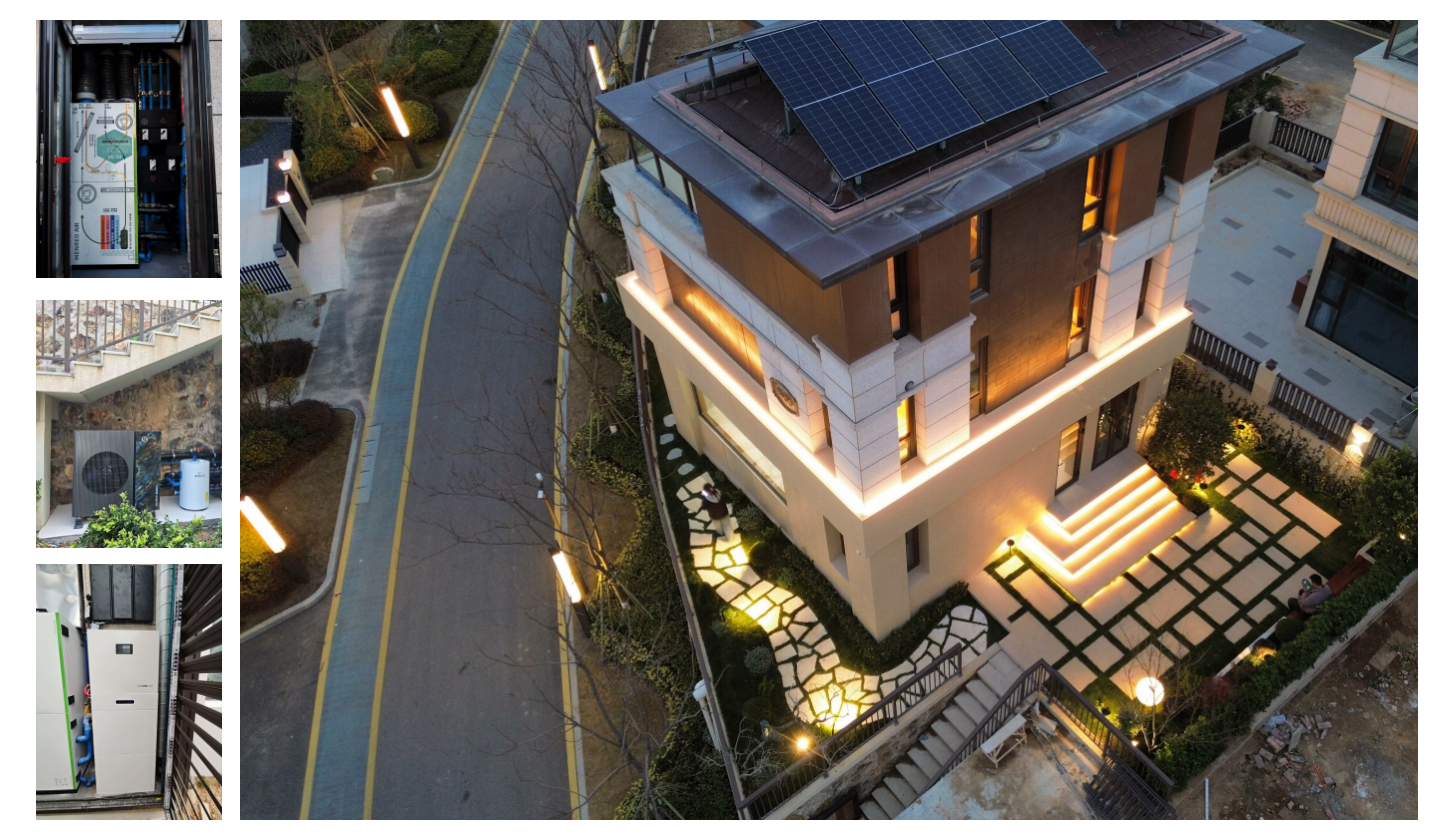
This project is a 180㎡ detached island villa located in southeastern China, designed to deliver a healthy and energy-efficient indoor environment through MENRED’s Wuheng indoor climate system.
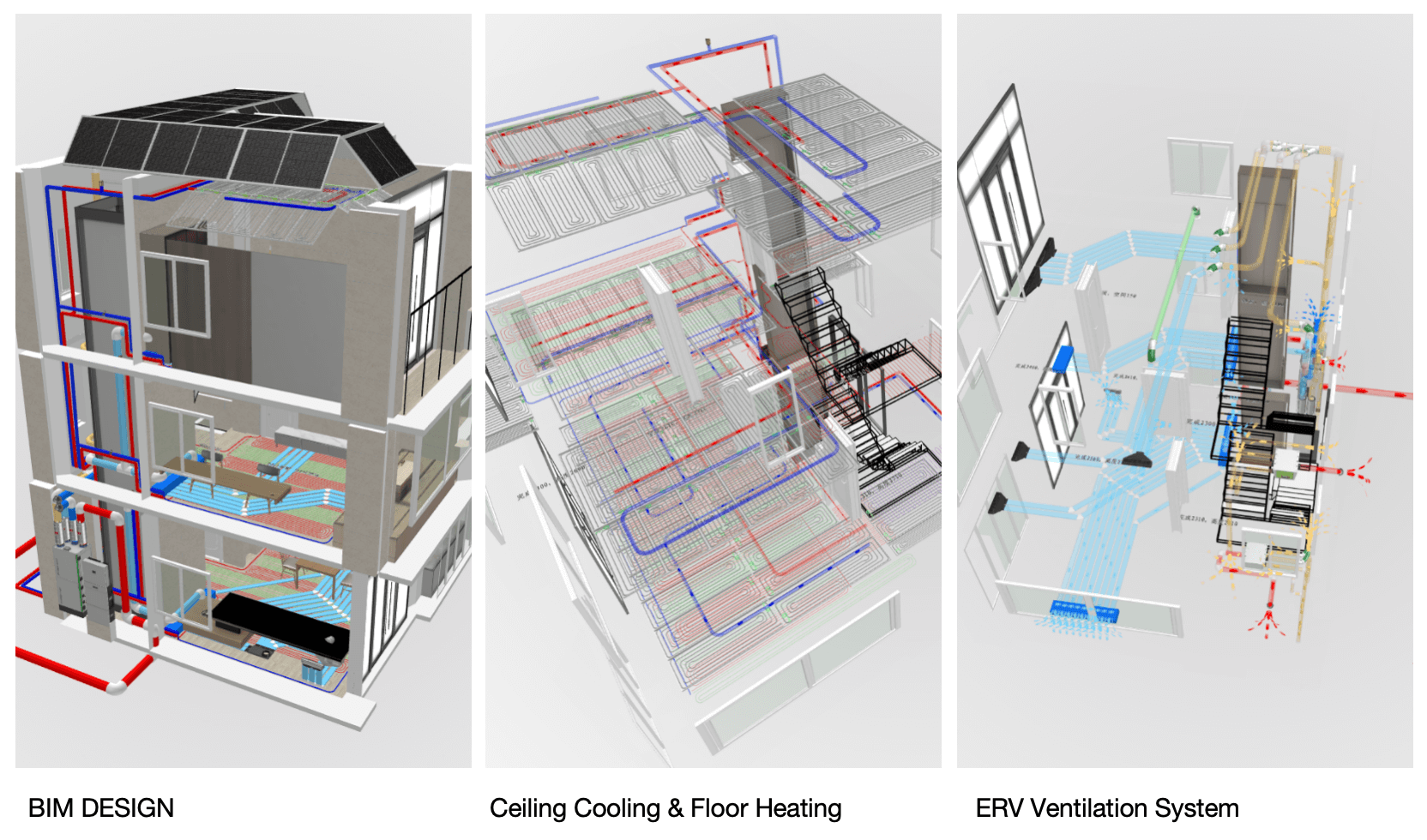
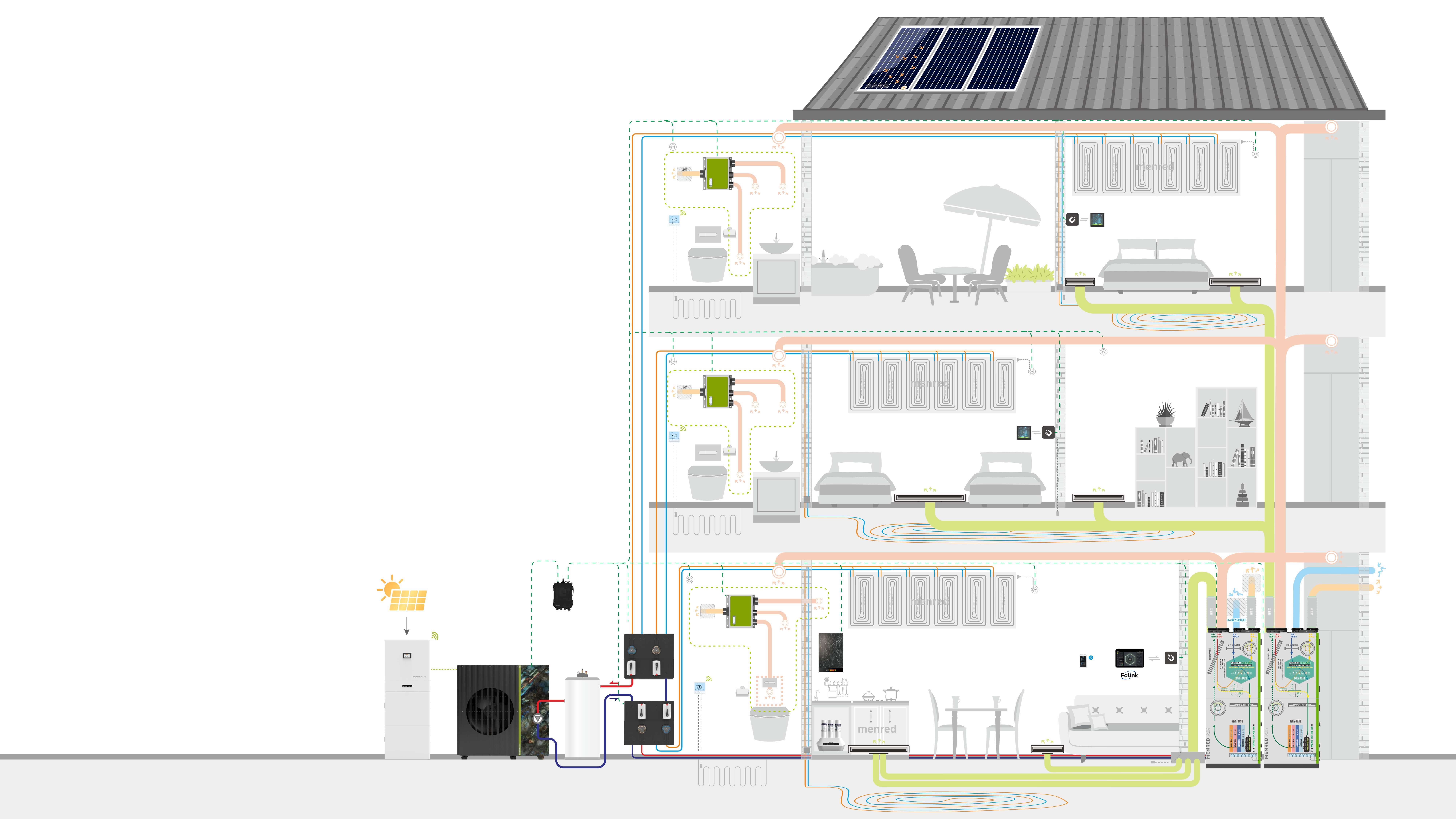
The villa integrates radiant cooling ceilings, hydronic floor heating, energy recovery ventilation, and rooftop solar power, creating a residential space where comfort is achieved without drafts, visible air-conditioning terminals, or mechanical noise.
Unlike conventional air-conditioning systems that rely on strong air circulation, this house uses radiant temperature control and controlled fresh air ventilationto maintain stable indoor environmental conditions.
The result is an indoor environment that is quiet, clean, and thermally stable throughout the year.
Climate Context
The villa is located insoutheastern coastal China, a region characterized by:
Such climate conditions traditionally require strong cooling and dehumidification from conventional HVAC systems. In this project, however, comfort is achieved through a combination of radiant cooling, humidity-controlled fresh air, and high-performance building envelope upgrades, significantly improving indoor environmental stability.
7H Design Principles
The project follows a design philosophy known as 7H Design, which focuses on long-term indoor comfort, architectural integration, and building durability.
Heritage – Long-Life Building Systems
The house eliminates traditional fan coil units and indoor mechanical equipment.
All major systems are installed in adedicated equipment room, ensuring that maintenance can be performed without entering living spaces. Water pipes, air ducts, and electrical systems are designed with lifespans comparable to the building itself, avoiding the need to dismantle interior finishes during equipment replacement.
Harmony – Invisible Building Services
The system design follows the principle that mechanical systems should remain visually unobtrusive.
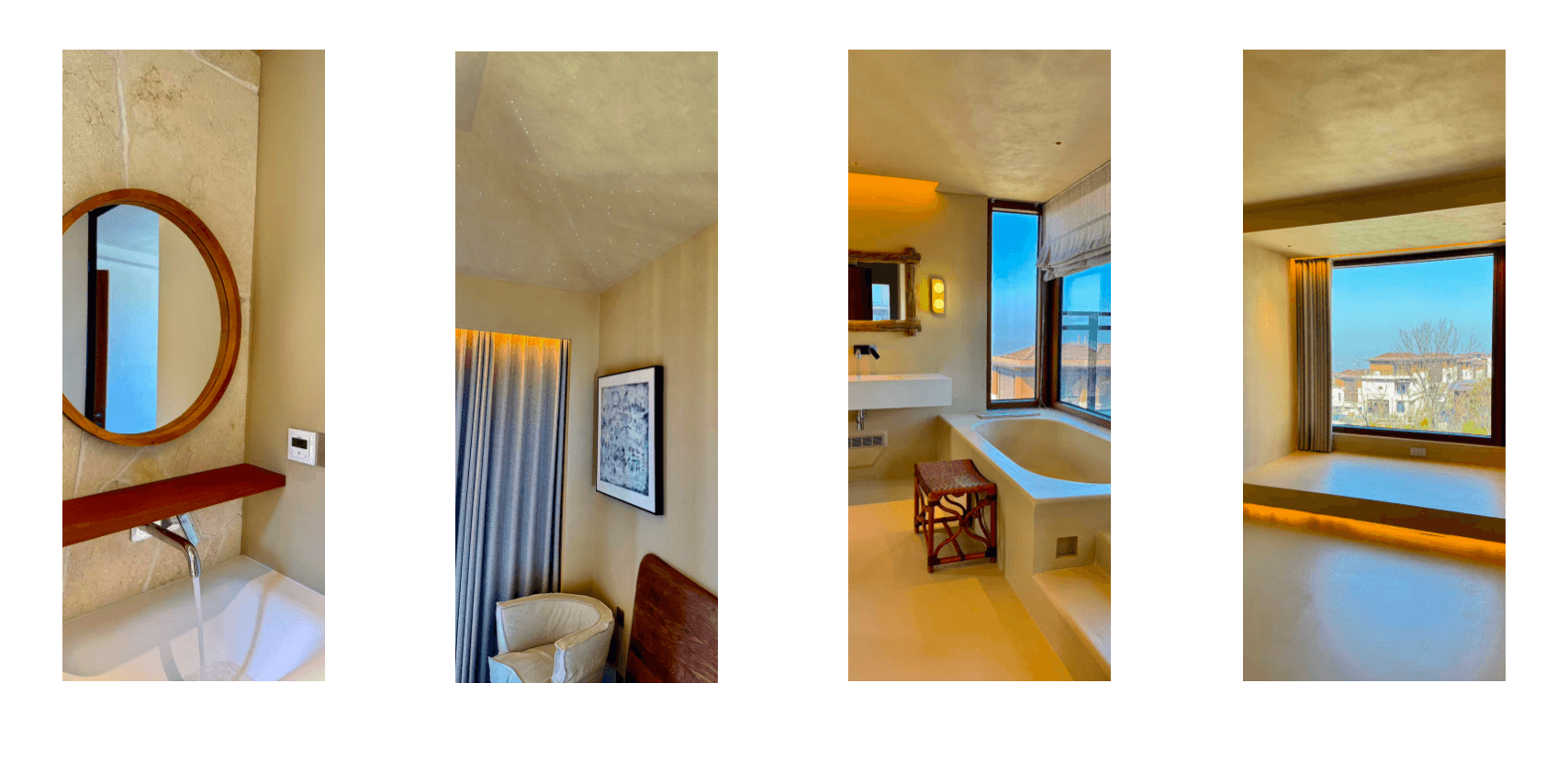
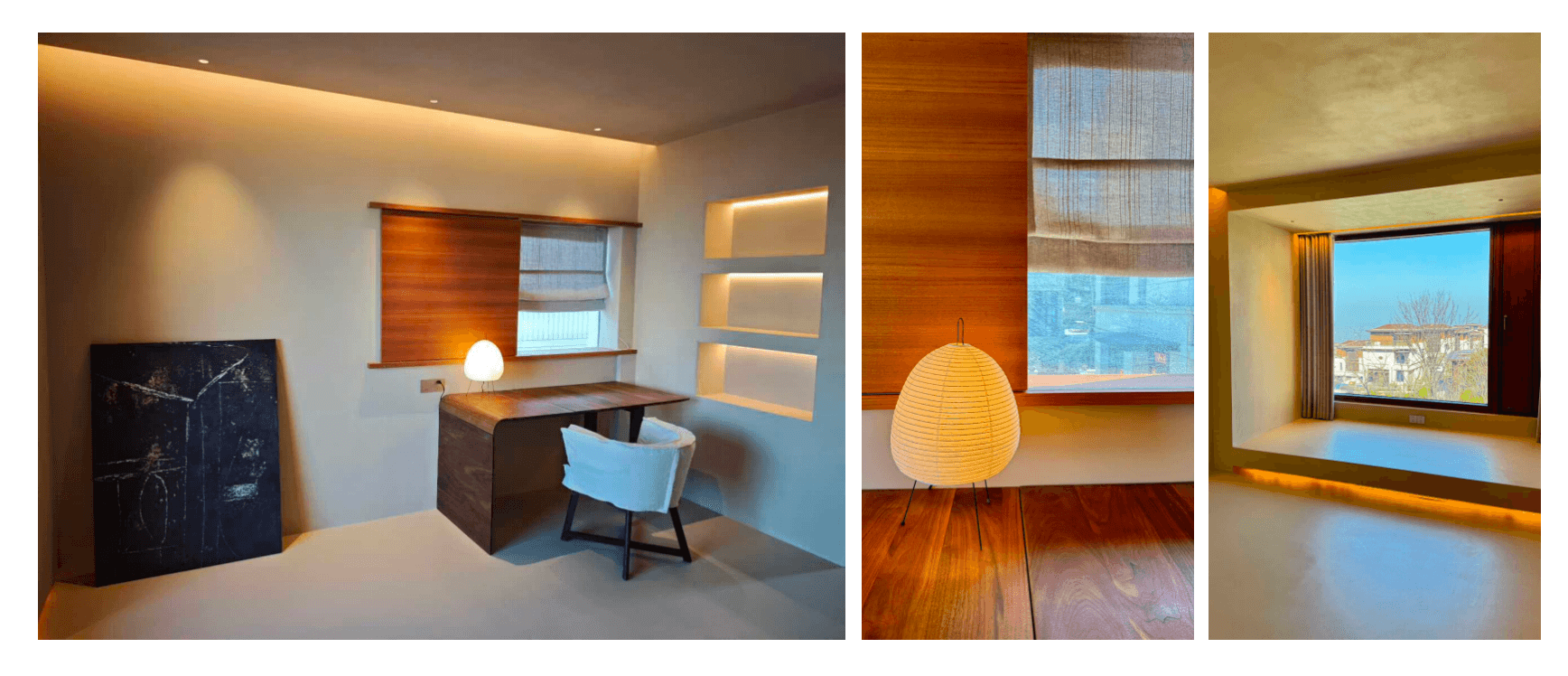
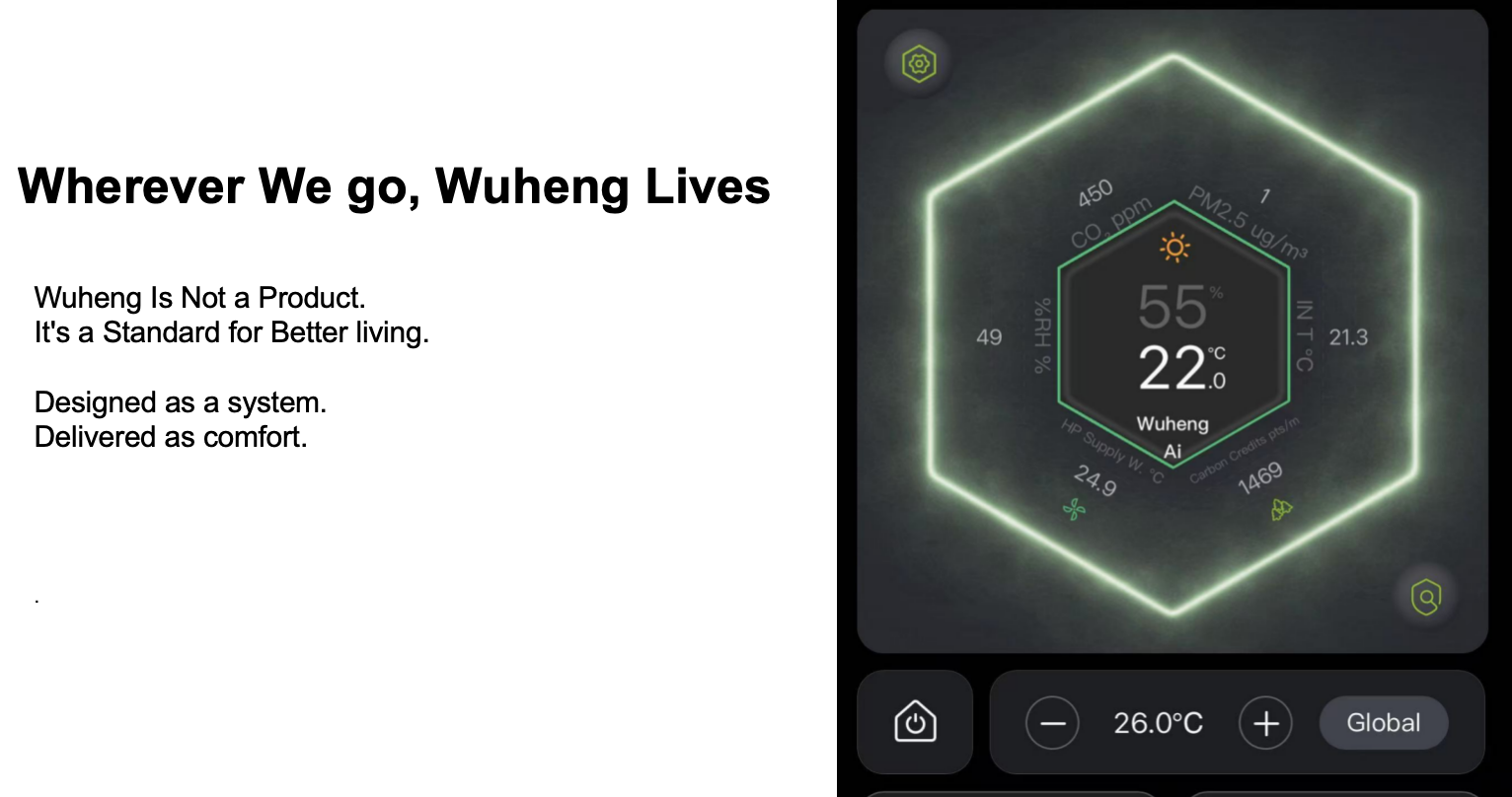
Ultra-slim air outlets and hidden air distribution allow ceilings and walls to remain visually clean. Residents control the indoor climate throughtablet or mobile applications, supporting a minimalist architectural aesthetic.
Health – Radiant Cooling without Drafts
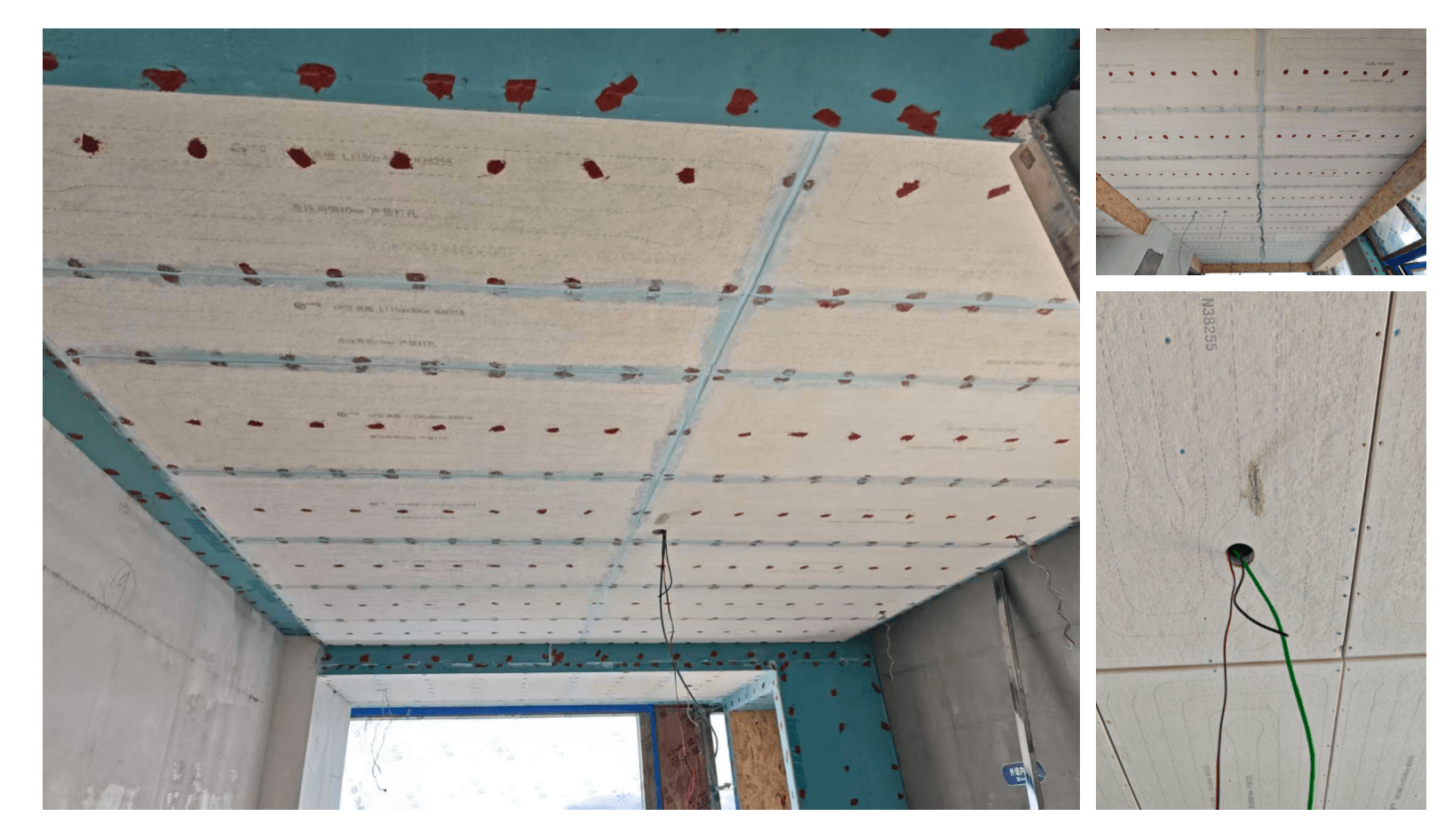
Cooling in summer is provided by MENRED radiant ceiling panels, with a total installed area of 83㎡ across the villa.
Radiant cooling creates a more natural indoor environment compared with traditional air-conditioning systems:
This approach significantly improves indoor comfort while reducing common health complaints associated with conventional air-conditioning.
Hush – Ultra-Quiet Living Environment
Acoustic comfort is a central design goal.
Bedrooms contain no rotating mechanical equipment, eliminating the typical noise generated by fan motors and air-conditioning terminals. Air ducts and outlets are designed with acoustic optimization to ensure extremely quiet airflow.
The result is a calm and silent indoor environment, particularly beneficial for nighttime comfort.
HEPA-Fresh – Energy and Humidity Recovery Ventilation
The villa is equipped with two ERV Ventilators (T6-360) with Isothermal dehumidification, each providing 360 m³/h airflow with total heat and humidity recovery.
These systems perform continuous indoor air replacement while recovering energy from exhaust air.
Key benefits include:
Airflow is carefully organized:
Exhaust air from the first floor is also used tocontrol humidity in storage spaces, preventing mold growth in humid coastal climates.
Hazard-Free – Safe System Design
For safety and long-term reliability,refrigerant lines are not allowed inside living spaces.
The indoor climate system relies onwater-based radiant distribution, while refrigerant-based equipment remains outside occupied areas. This design improves safety while reducing potential maintenance risks.
Heat-Shield – Building Envelope Upgrade
The project includes improvements to the building envelope to reduce energy demand and improve thermal stability.
Key upgrades include:
These measures improve summer heat protection, winter insulation, airtightness, and acoustic performance.
Radiant Cooling and Heating System
The villa combines radiant ceiling cooling and hydronic floor heating to maintain stable indoor temperatures throughout the year.
Cooling is delivered through 83㎡ of MENRED radiant ceiling panels, while winter heating is provided by the floor heating system.
The system is powered by an 8 kW heat pump, designed to match the building’s reduced thermal load of approximately 28 W/m².
Key features include:
This low-energy design allows the system to operate quietly while maintaining stable indoor conditions.
Solar Energy and Energy Storage
To further reduce operational energy consumption, the villa integrates solar photovoltaic generation with battery storage.
System configuration includes:
Stored energy supports:
This configuration allowshigh daytime self-consumption of solar energy while storing surplus electricity for evening use.
Invisible Technology, Visible Comfort
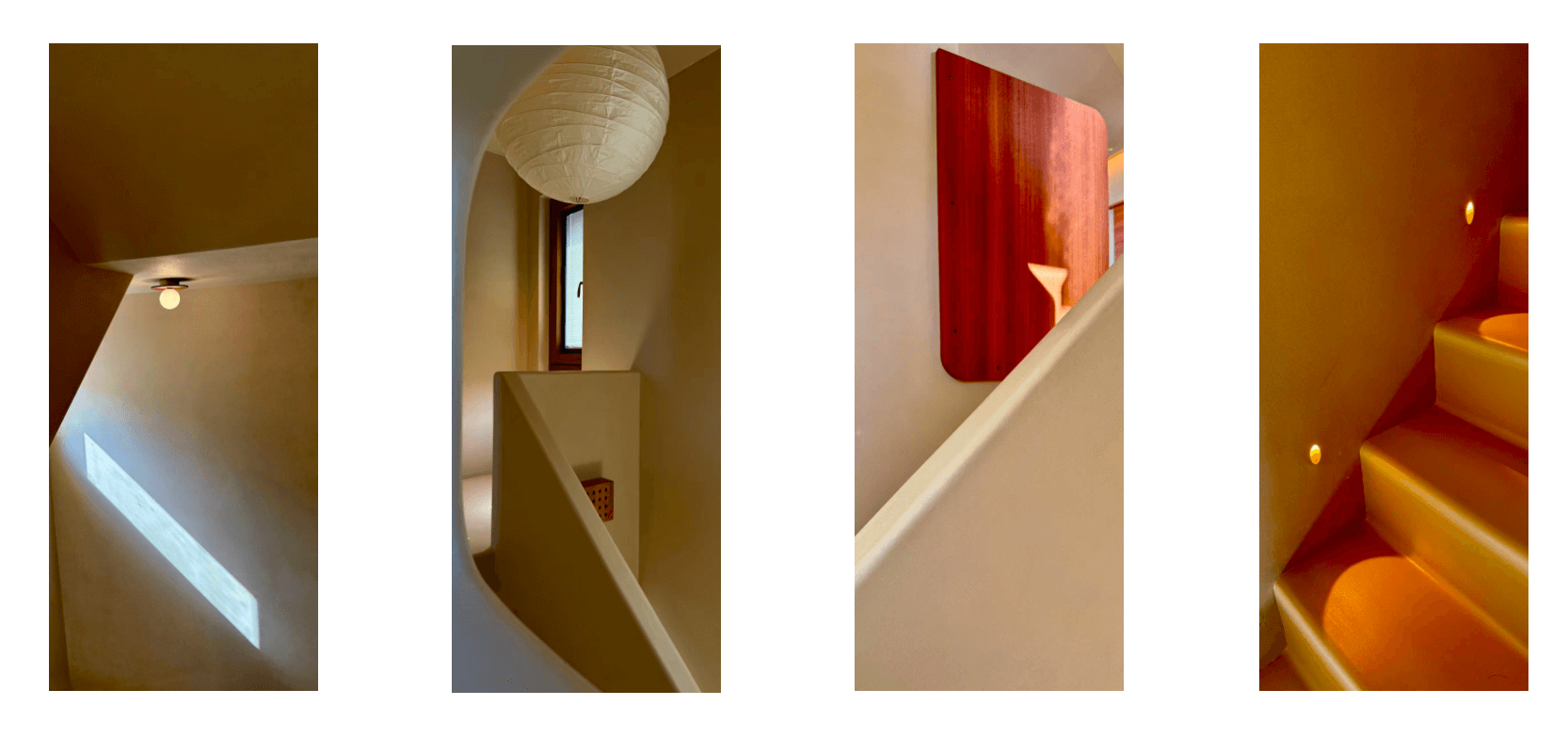
One of the most distinctive features of this villa is that no mechanical equipment is installed inside living spaces.
Only water pipes, air ducts, and electrical wiring remain within the interior structure. All mechanical equipment is located in a dedicated equipment room.
This approach ensures:
The building envelope itself becomes anactive thermal interface, while the ventilation system maintains fresh and healthy indoor air.
A Coastal Example of Wuheng Indoor Climate Design
This island villa demonstrates how the Wuheng indoor climate systemcan support a new generation of residential design focused on healthy living and architectural clarity.
By combining radiant cooling, energy recovery ventilation, building envelope optimization, and renewable energy, the project achieves a living environment that is:
Wuheng Climate System Layout
Economy Park HQs, Yueqing City, China.
Weisswasser Germany
Lingkun Island,Wenzhou City,Zhejiang China.
Nanhu District, Jiaxing City, Zhejiang China.